MUNDANE to MINDFUL
Transform your daily routine
Mindfulness is the practice of being present. With a clear intention and focus, mindfulness can be developed through techniques which help us balance our attention between our inner world of thoughts and feelings and the outer world around us. With a little practice and effort, mindfulness can help bring better awareness and focus to our lives.
We’ve teamed up with mindfulness expert Patrick Groneman, whose tips show how you can be mindful even during these nine everyday tasks. Pair them with daily breathing exercises for the best results.

Being mindful while getting ready
When you are getting ready in the morning, set a clear time-frame for your tasks. This is your time to prepare for the day ahead, so leave your phone off, or set it to ‘do not disturb’.



Showering
When showering, place your focus on the feeling of the water droplets splashing on your skin.
Notice the fragrances of soap and shampoo as you scrub and rinse.
Brushing your teeth
Before you brush your teeth, take a few moments to appreciate the toothpaste on your brush, notice its colours and smell, and how it interacts with the light.
As you brush, consider your teeth like you would a beautiful statue. Be gentle as your brush and clean.
How to have a mindful commute
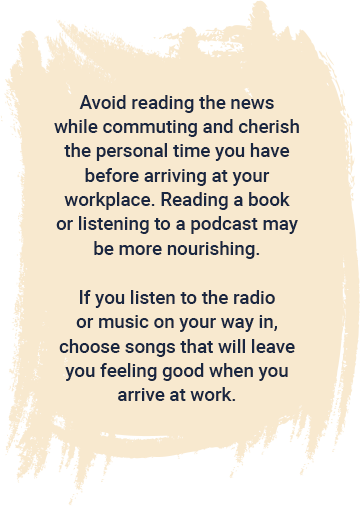
Leaving the house and heading to work can be an excellent time to practice mindfulness. Whether it’s a short walk, long drive, or train journey, the way we spend our time and energy during our commute has a big impact on the rest of our day.




Being mindful at work
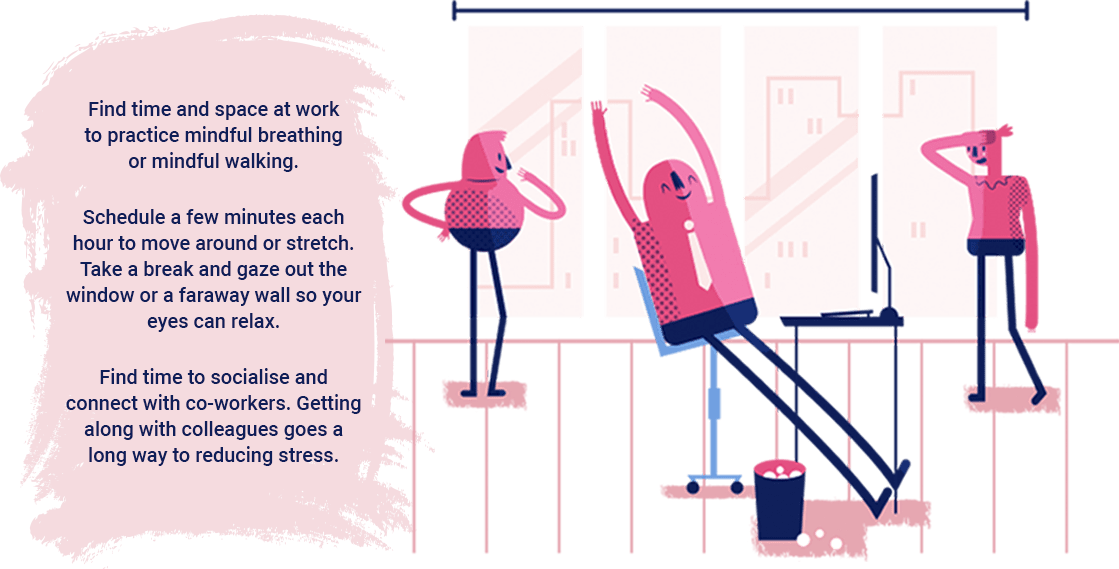
Being mindful at work can sometimes be a challenge. With so many tasks, relationships and deadlines to manage, order can quickly turn to chaos. Here are a few tips for being mindful while working in an office.

Mindfulness while food shopping
Whether you are cooking solo or with friends or family, meal preparation is an excellent opportunity to practice mindfulness. Light a candle or some incense and be methodical with each aspect of the meal preparation, approaching each step with care.


Give yourself the freedom to investigate, hold, admire, or smell something that draws your attention.
When you find something on your list, use the same gentleness and care you’d use for a crate of eggs to gently place it into your basket, trolley, or bag at the tills.
Mindful eating
When eating, take time to enjoy every bite, indulging yourself in the tastes and textures. Be grateful for the food on your plate, whether it’s a meal you’ve cooked yourself or you are eating a meal a friend or family member has prepared for you.


Mindful washing up
Before washing up, gather all the dirty dishes into one place beside the sink. Empty the drying rack to allow room for the new dishes to dry.
Place the first plate or dish into the soapy water. Keep your focus with the feeling of your hands and the sponge as you wash the plate. Gently rinse, placing neatly into the dish rack.
Repeat for each dirty dish. If your mind wanders, gently return to the task of cleaning and rinsing, before arranging in the drying rack.
How to be mindful while exercising
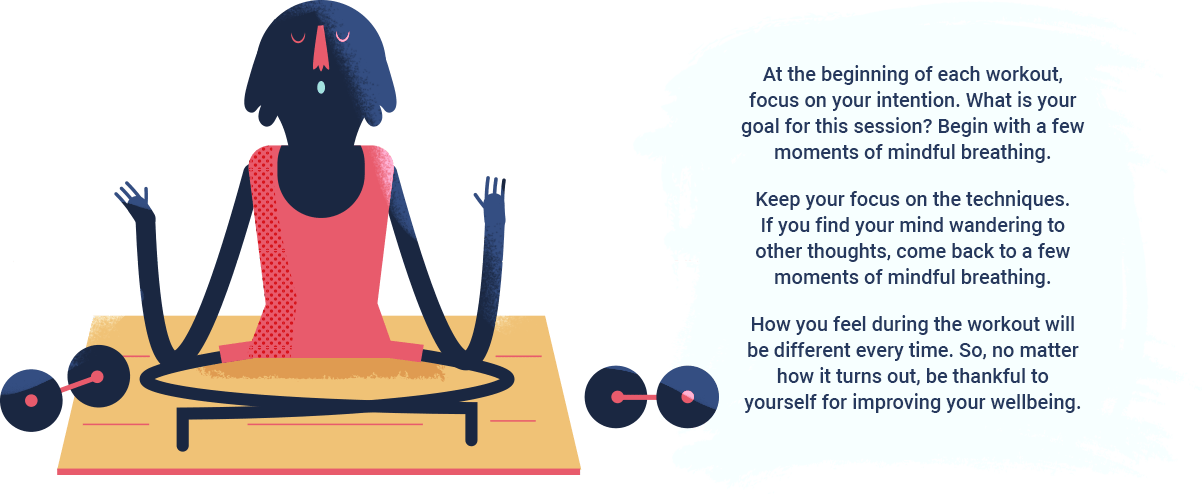
Exercising is time where you should focus your attention solely on your own wellbeing. Be mindful of your actions, whether you are using gym equipment or are in the great outdoors. Breathe easily and feel the rewarding sensations as your body benefits from the exertion.

Mindfulness while doing laundry
Don’t overlook the time you spend doing laundry as a time to practice mindfulness. Be calm. Take it slowly from the moment you load the washer, to when you’ve finished ironing that last crisp, warm item of clothing.





Cleaning the house mindfully
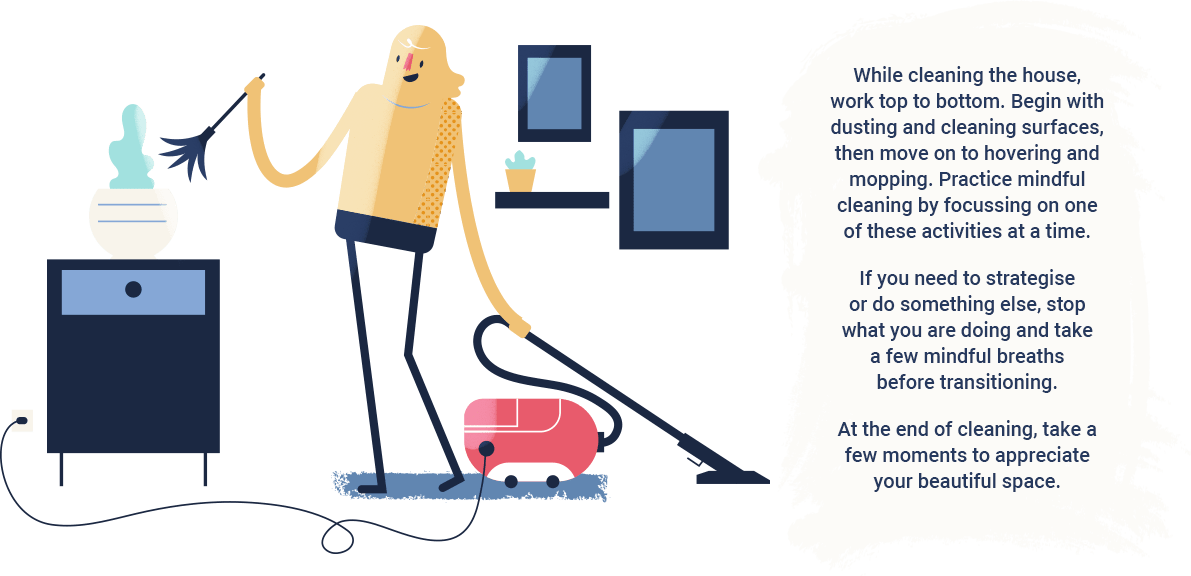
Cleaning is an ideal way to increase mindful feelings and, as you organise your living space, you’ll be decluttering your mind too. It doesn’t have to be daunting. Consider your plan of action and admire your home as you move carefully from room to room.

Mindful gardening
Mindful gardening is a beautiful opportunity to connect with nature. Begin with a clear vision. Think like a painter who begins a painting or a chef who is preparing a feast. A garden is a place where creativity, nature and mindfulness all come together. Choose plants that will grow well together in the environment, and decide where the colours of flowers and foliage will fit best in.
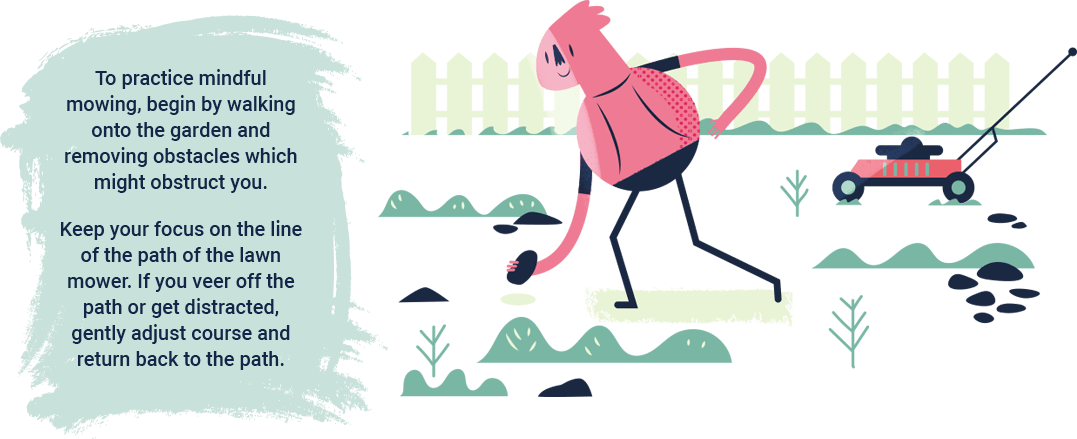

Take a few mindful breaths and begin weeding by gently pulling away at the large, loose weeds in the work area. Then, work your way down to the smaller, lower plants.
Notice the range of aromas in the garden. If you notice your mind drifting away from the work, gently use your sense of smell to return to the presence around you.
When using a tool like a rake, try to keep the same sense of focus and connection with the garden as when weeding by hand.
When cleaning leaves, begin by planning out your path of sweeping or raking first, and then move into mindfully moving through the work.
When you’ve finished, notice the smells and colours in the garden around you. Appreciate all the effort you’ve put into making a beautiful garden.
Mindfulness won’t happen immediately, so take these tips and make little steps towards a better state of mind. Simply savour those moments when it’s just you and the world around you, celebrate life’s little wonders and the small moments that tie it all together, and make your life a little more wholesome.
Embed this page as an infographic
Share this page


A guide to every day mindfulness, by Flymo UK
Lorem ipsum dolor sit amet, consectetur adipisicing elit, sed do eiusmod.